繁星 (Fánxīng)
Historical Context
Bing Xin (冰心) was born in 1900 and grew up in China.
She was born Xie Wanying (谢婉莹); 冰心, her pen name, means “ice heart.”
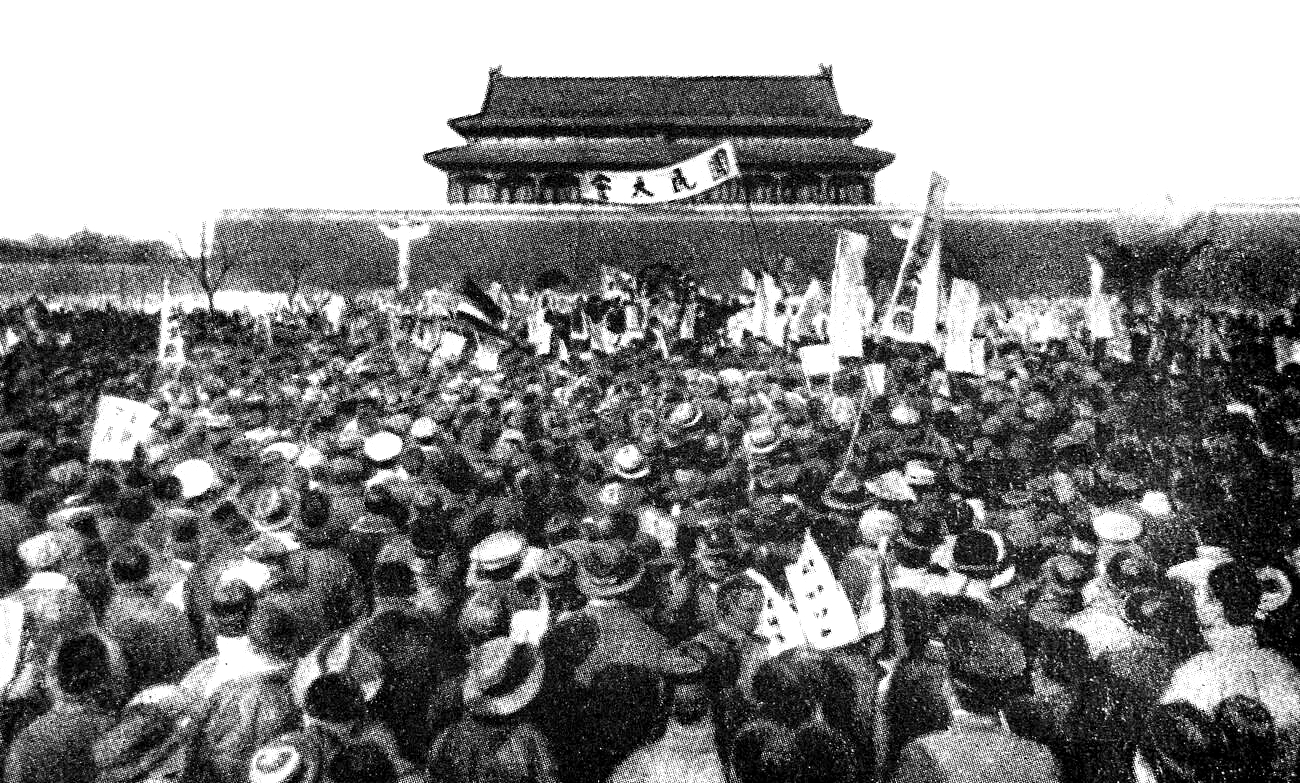
She began writing during the May Fourth Movement of 1919, when young writers stopped using classical Chinese in favor of the vernacular (白话).
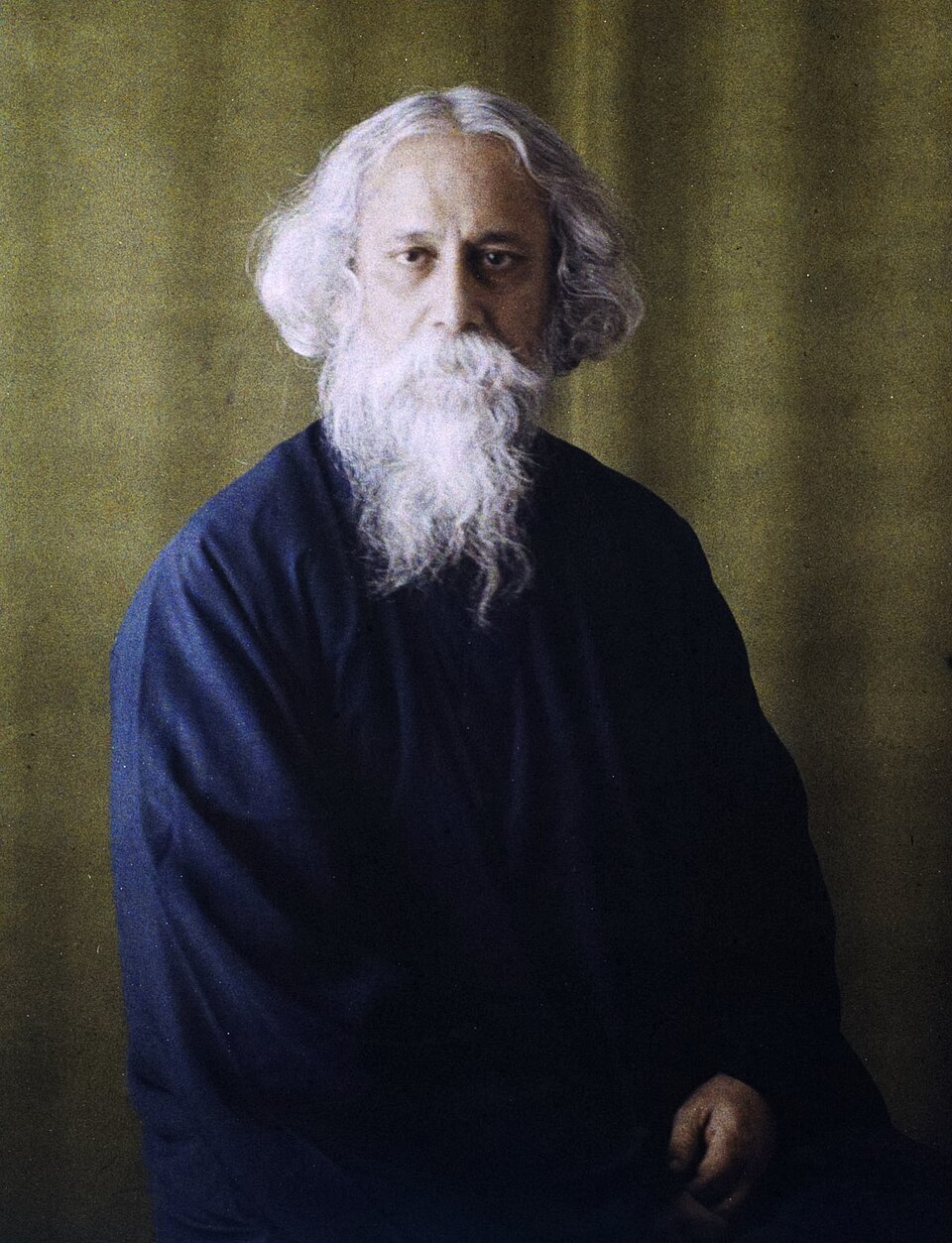
Inspired by Tagore’s Stray Birds (飞鸟集), she gathered her short thoughts into 繁星, 164 brief poems written between 1919 and 1921 and published in 1923.
This is the first.
冰心《繁星·一》
深蓝的太空,
何曾听得见它们对语?
沉默中,
微光里,
它们深深的互相颂赞了。

Understanding the Poem
Here are three different translations to try to get at the meaning.
The first translation is my own and prioritizes the meaning a Chinese reader would get while sacrificing the experience of an English reader.
The second is by John Cayley and Grace Boynton and is quite an experience for the English reader but adds meaning not in the original Chinese.
The third, by Julia C. Lin, retains the simple conciseness of the original but again adds its own meaning.
And here is a word-by-word translation, to see the meaning as a Chinese reader would. The square brackets [] indicate a grammatical term.
The three translations translate 繁 three ways: “vast,” “a maze of,” and “infinite.” 繁 means many, dense, and intricate, and no English word contains all of these meanings.
Chinese verbs don’t conjugate to carry tense, so tenses, unlike in English, are optional. Tenses are often indicated with additional, optional grammatical markers. 着 is one of them and marks an ongoing action.
What is a one-syllable marker in Chinese is either dropped in translation or translated as “continuously,” adding length the original did not have.
The dash leaves the line open, but only one translation includes it.
The entire second line is a noun phrase.
The 的 is merely a grammatical character indicating that deep blue (深蓝) is an adjective modifying the noun expanse (太空).
The term 太空 would be understood by a modern Chinese reader as “outer space,” but an early 20th-century reader would have understood it as “expanse,” with a plainer connotation than the English word has.
Chinese does not differentiate between singular and plural nouns, so the line could be translated as “deep blue expanse” or “deep blue expanses.”
The parataxis in Chinese is very concise and plain while leaving the relation unstated.
The first translation recreates the simplicity but loses some of the connection to the rest of the poem.
The second and third translations set out to capture the feeling of the original by spelling the relation out, but in turn they lose the simplicity of an isolated phrase.
Chinese grammar creates an ambiguity that English cannot. The original Chinese line has no subject.
This shifts focus from whoever could or could not hear the dialogues to the creators of the dialogues themselves.
The closest English can get to this is using the passive voice, as in the first translation, to shift the focus.
In the third line, the term 何曾 is a classical rhetorical marker. It contrasts with the modern vernacular of the previous lines.
听得见 doesn’t ask if the dialogues were heard but whether hearing them is possible.
对语 is an unusual word choice. The more common, conversational term for dialogue or conversation would be 对话.
对语 gives a more literary feel, again making this line feel more formal and older than the rest of the poem.
Additionally, 对 means face to face or reciprocal, suggesting the dialogues are mutual.
它们 means “they” in English, but in Chinese it indicates that the “they” are not human. While pronounced the same, Chinese uses 他们 for human “theys” and 它们 for animals or inanimate “theys.”
None of the translations recreates the contrasting literariness of this line, and the second and third translations add subjects not mentioned in the original.
Lines four and five have parallel three-character phrases with a noun plus a version of “inside” (中/里). Silence is about sound and glimmer about light, so the poem moves from hearing to seeing.
It answers the rhetorical question of line three: the stars’ conversations are not heard; instead, they are in silence and light.
沉默 is an interesting term. 沉 by itself can mean to sink or submerge (into water), to indulge or to give in to, dark or gloomy, or long and prolonged.
默 by itself can mean to be silent or to act in secret.
When combined, the phrase 沉默 evokes a feeling of weighted, consuming silence, not just the lack of sound.
On its own, 微 can mean tiny, faint, waning, or obscure.
光 means light as a substance, not brightness.
When combined, 微光 means a faint light that feels like it’s barely there.
中 and 里 both mean “in” or “within,” but 中 marks an abstract, enclosed space (as silence is a condition you are inside of) while 里 marks a more concrete area (as faint light is a substance you are surrounded by).
Bing Xin’s choice of 中 for 沉默 and 里 for 微光 is a deliberate asymmetry.
The English words “in” and “within” only hint at this, and the phonetic contrast is lost.
Again, Bing Xin uses 它们, specifying that the stars are not people. This is in contrast to the personification that immediately follows.
For a second time, we see the character 深, meaning deep. In this instance, it is doubled, making it heavier and slower than its first use while describing the depth of the praise.
互相, meaning mutually, reminds readers again that the stars’ conversations are reciprocal.
颂赞, like the word choice in line three, again shifts the poem’s register away from plain and simple. 颂赞, meaning to praise or extol, is liturgical. The stars’ praises are devotional worship.
了 indicates that the worship is complete and the action is no longer ongoing.
Here we get another answer to the question in line three: the stars are not heard, but they have spoken, and their speech is deep, mutual worship.
All the English translations have a lot of active language.
The original Chinese, however, has a much more passive feel. Chinese has a tendency to drop the subjects of sentences, meaning that what happens isn’t caused by anything or anyone in particular.
Only my translation and Lin’s keep Bing Xin’s indents.
Even then, they differ: every Chinese character fills the same square, so an indent is exactly one character. English letters vary in width.
Line length is impossible to match. In Chinese, one character is one syllable, so the lines run five, five, nine, three, three, and ten, on the page and aloud.
冰心《繁星·一》
深蓝的太空,
何曾听得见它们对语?
沉默中,
微光里,
它们深深的互相颂赞了。
冰心《繁星·一》
深蓝的太空,
何曾听得见它们对语?
沉默中,
微光里,
它们深深的互相颂赞了。
Vast Stars (1) by Bing Xin
Deep blue space,
Could their words ever be heard?
Within silence,
In the glimmer,
They have deeply, mutually chanted praises.
A Maze of Stars (1) by Bing Xin
in the deep azure vault of sky.
When before have I overheard their whispers?
In the profound silence,
in their own faint light,
this deep acknowledgment of one another.
Infinite Stars (1) by Bing Xin
In the deep blues of sky
Does anyone ever hear them talk?
In the depths of silence
Within this faint light
They brightly sing one another’s praise.
Analysis
A myriad of stars glitter in the sky. No one hears them, but in silence and faint light, they deeply praise each other.
Through silent light, the stars speak without being heard. This is my thesis, Addie!
The poem starts with light as the stars 闪烁 (glitter). Before we even consider whether they speak, they are shining without end.
The marker 着 makes the glittering continuous, so their light, and therefore their speech, never ends.
Line three asks whether they can be heard. The rhetorical indicator 何曾 expects the answer no.
The line also has no subject, and therefore no listener. The stars speak to each other and aren’t meant to be heard by us (humans).
它们 supports this. Bing Xin deliberately chooses a pronoun used for inanimate objects, so human ears are never the audience.
对 in 对语 means face to face, so we know the stars are talking to each other while we wonder if we can hear them.
Lines four and five answer the rhetorical question with settings. The stars are in silence and faint light, moving from sound to sight.
沉默 is a heavy, consuming silence, and 微光 is a light barely there. The stars speak to each other through almost nothing.
Bing Xin places the stars in silence but surrounded by light. Silence is their condition, while light is their medium of communication.
The shape of the poem adds to this. Lines four and five are only three characters each, both short and quiet, as if the poem itself falls silent.
Line six confirms their conversations. 互相 means their conversations are reciprocal, and 了 means they’re complete.
深深 repeats the 深 in “deep blue sky” from line two. The depth of the sky becomes the depth of their praise, and 颂赞 turns that praise into worship.
Line six is the longest line and ends with a full stop (period) instead of a question mark. The question in line three is answered with this statement: the stars have spoken.
Their conversations aren’t heard but are seen by each other through their light.
Bing Xin suggests that the deepest connections can be seen, not heard.
冰心《繁星·一》
深蓝的太空,
何曾听得见它们对语?
沉默中,
微光里,
它们深深的互相颂赞了。